614 Exteriors is the ONLY Atlas PRO+™ Diamond Level Contractor in the Greater Columbus Area and only 1 of 3 in the state of Ohio
Learn MoreCan Clogged Gutters Cause Ice Dams? What Columbus, Ohio Homeowners Should Fix Before Winter. Learn what to check before freezing weather.
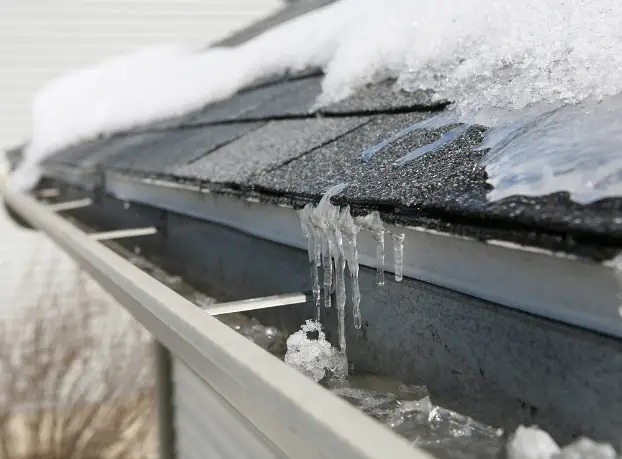
Yes, clogged gutters can contribute to ice dams and make them worse, although they are rarely the only cause. Ice dams usually start when heat escaping through the roof melts snow, then that water reaches colder eaves, refreezes, and cannot drain freely. Packed leaves and debris give that water one more place to stop.
For Columbus homeowners, that matters because winter temperatures regularly move above and below freezing. National Weather Service 1991–2020 normals for Columbus show an average January high of 37.19°F, an average low of 21.97°F, and 9.5 inches of normal January snowfall. That freeze-thaw pattern can turn a small drainage problem into a roof-edge problem.
Ice dams are not simply “frozen gutters.” Heat from the home can warm the roof deck, snow melts, and water runs toward the colder roof edge. When it refreezes near the eave, the ice can build into a ridge that traps more water behind it.
A clogged gutter can make that situation worse because meltwater has nowhere clean to go. Leaves, sticks, shingle granules, and frozen downspouts can hold water at the eave. The National Weather Service specifically recommends clearing gutters and downspouts so melting roof snow can drain away.
That is why we look at the entire roof-and-gutter system rather than treating a large icicle as an isolated winter nuisance. What is happening at the edge of the roof may involve drainage, heat loss, ventilation, insulation, or several of those issues at once.
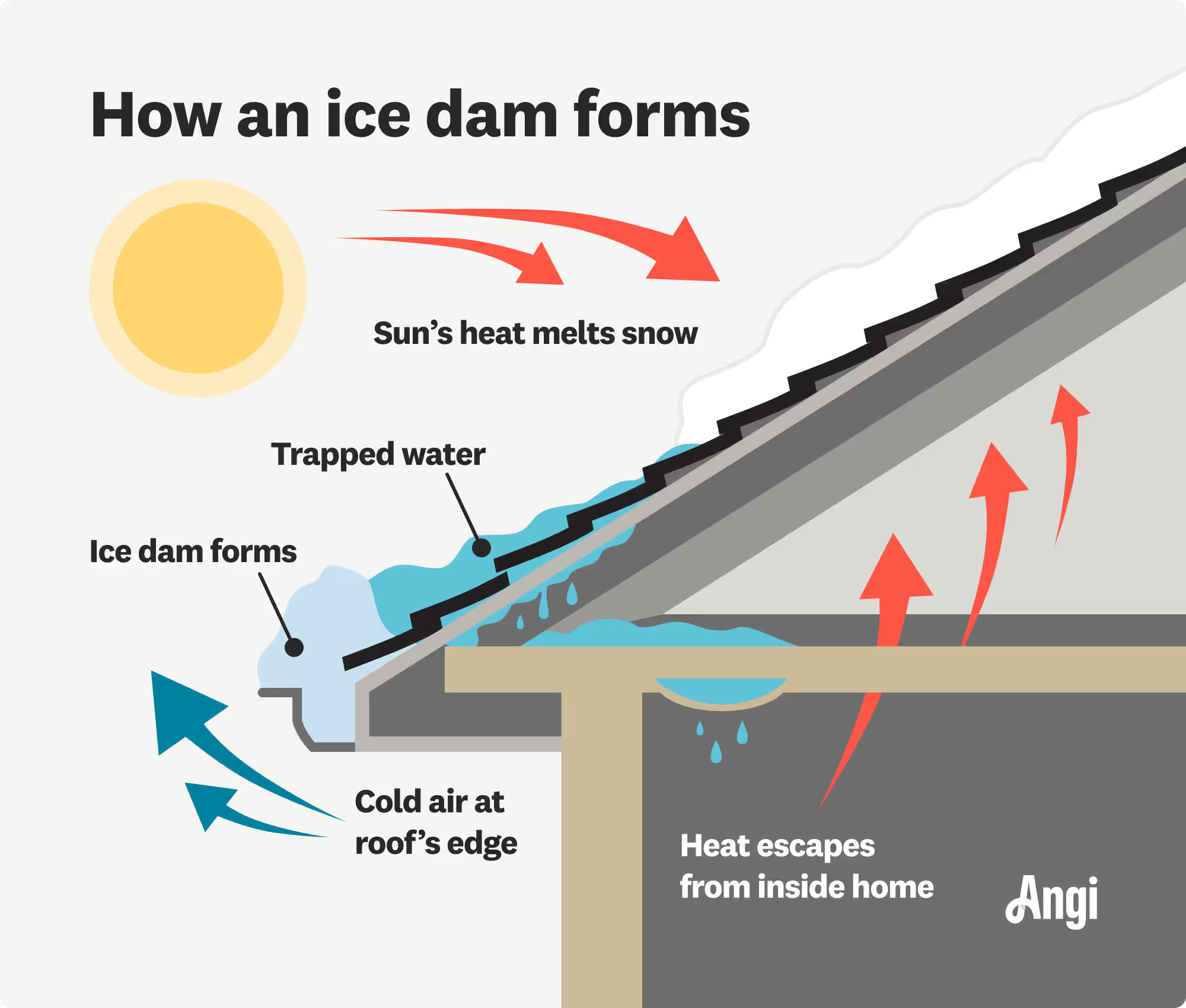
The short answer is yes: clogged gutters can contribute to ice dams by slowing or blocking meltwater at the coldest part of the roof. But cleaning the gutters alone does not correct every ice-dam problem.
Before winter, check the gutters, downspouts, gutter pitch, loose fasteners, fascia, roof edges, attic insulation, and attic ventilation. If a gutter is already sagging or pulling away, frozen water adds even more weight to a weak section.
This is where professional Gutter Repair can make more sense than simply scooping out leaves. A gutter that is clean but pitched incorrectly can still hold water, and a downspout that looks open at the top can still be restricted farther down.
Clogged gutters can do more than overflow during rain. Water can soak fascia boards, stain siding, collect near the foundation, and freeze along walkways. Standing water inside the gutter can also expand as it freezes and stress seams, hangers, and fasteners.
At 614 Exteriors, we try to assess roof decking before a tear-off whenever possible, but owner Keith Staschke has explained that multiple roof layers can hide damage until the shingles come off. The team has had projects where damaged plywood was discovered mid-job and a truckload of new wood had to be delivered. What looks small from outside is not always small underneath.
Keith has also shared how a seemingly minor leak on one restoration project opened up into far more damage than anyone expected. The lesson was to recognize the true scope early and stay within the work a contractor does best. For homeowners, the takeaway is similar: address drainage problems before winter moisture turns a manageable issue into a larger repair.
Start with drainage. Schedule Gutter Cleaning after most leaves have fallen but before repeated hard freezes arrive. Make sure downspouts discharge freely and move water away from the foundation.
Then look above the gutter. Repeated ice at the same roof edge can point to warm attic air escaping through gaps, inadequate insulation, or poor ventilation. The U.S. Department of Energy identifies air sealing, insulation, and ventilation as important parts of preventing ice dams because the goal is to keep the roof deck closer to the outdoor temperature.
A practical pre-winter check includes:
For additional homeowner guidance, see the National Weather Service guide to preventing roof ice dams.
The safest answer is usually not “pour something on it.” Rock salt and aggressive deicers can damage metal, roofing materials, landscaping, or exterior finishes depending on the product and how it is used. Chipping ice with sharp tools can also puncture gutters or damage shingles.
For minor buildup, improving drainage and allowing temperatures to rise may be enough. Heat cables can help in some specific applications, but they should not be treated as a substitute for fixing heat loss, drainage, or ventilation problems.
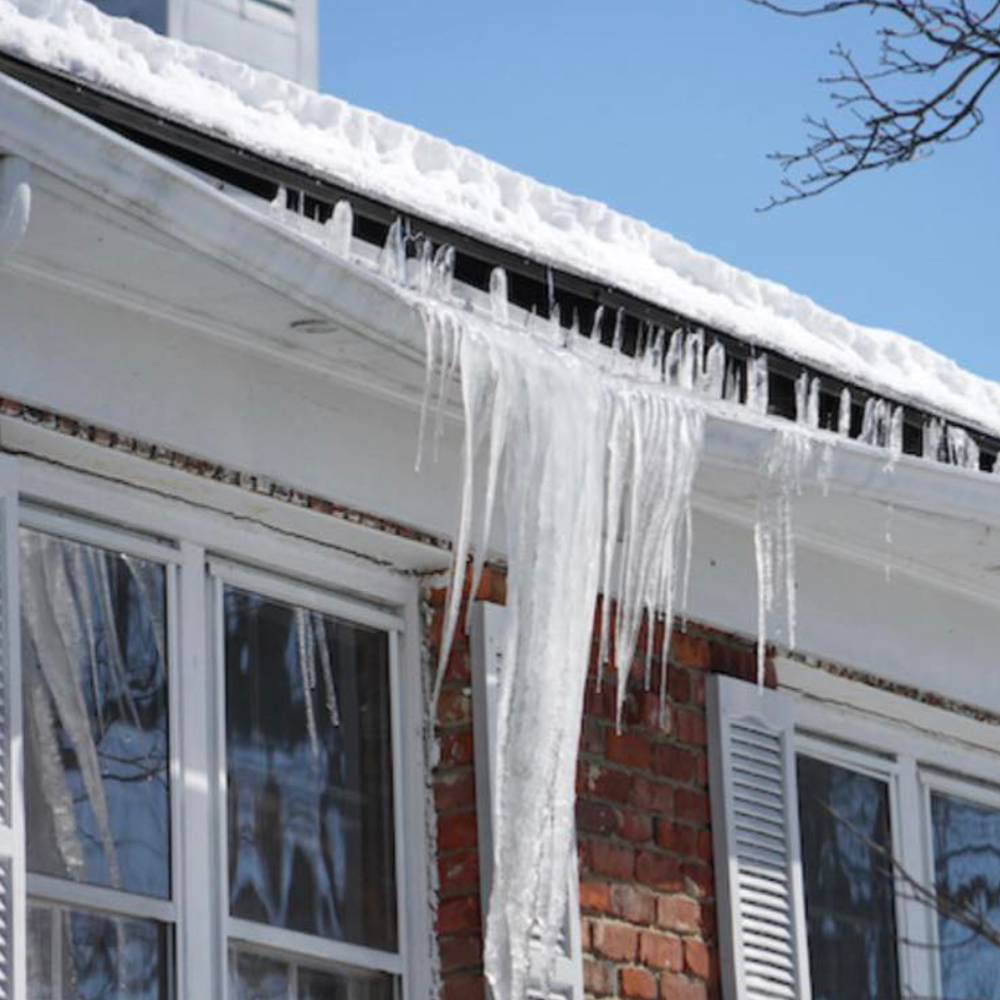
If you see large icicles every winter, treat them as a clue. They show that water is moving across a cold roof edge and freezing. The long-term fix should address that process, not just melt the visible ice.
.jpeg)
When an ice dam is already present, safety comes first. Do not climb onto a snowy or icy roof, stand underneath large icicles, or attack the ice with tools that can damage the roof edge.
A roof rake can sometimes remove snow from the lower roof while you stay on the ground, reducing the meltwater feeding the dam. For a large ice dam, active leak, steep roof, or hard-to-reach area, professional removal is the safer option.
If water is entering the home, document the affected area and prevent additional interior damage where you safely can. If the problem followed a recent storm, read Storm Just Passed? What Columbus Homeowners Should Check Before Filing a Roof Claim before assuming every roof issue requires an insurance claim.
Sometimes, but coverage depends on the policy and the cause of damage. Homeowners insurance may cover sudden and accidental interior water damage caused by an ice dam, while maintenance-related deterioration may be excluded. The roof or gutter problem that allowed the loss to develop may also be treated differently from the resulting interior damage.
Do not assume “ice dam” automatically means covered or excluded. Take photos, protect the property from additional damage, and ask the carrier or agent to explain how the actual policy applies.
Preventive maintenance still matters. State insurance guidance in cold-weather regions warns that lack of maintenance can affect claim decisions, so keeping gutters, roofing, and drainage in reasonable condition is worth documenting.
Not automatically. A roofer could be responsible if defective installation directly caused damage, but many ice dams involve heat loss, attic ventilation, insulation, drainage, weather conditions, or existing construction details.
At 614 Exteriors, Keith’s approach has been to stay within the company’s strongest areas—roofing, siding, gutters, and exterior work—and be straightforward when a problem falls outside that wheelhouse. That matters because an ice-dam solution may require a roofer, gutter professional, insulation contractor, or a combination.
If a roof was recently replaced and ice began appearing in a new location, have the installation inspected. If ice has formed in the same spot for years, the root cause may predate the current roof.
Walk around the home after a fall rain. Look for overflowing sections, drips behind the gutter, standing water, loose downspouts, staining on fascia, and erosion where downspouts discharge. Those are easier problems to investigate before water freezes.
If you need a Columbus Gutter Company to inspect the system, schedule it before the first major snow rather than after ice is hanging from the eaves. Homeowners concerned about Ice Dams Columbus, Ohio should also have recurring roof-edge ice evaluated for attic heat loss and ventilation issues.
The goal is simple: give meltwater a clear path off the roof and away from the house while keeping the roof deck cold enough to reduce unnecessary melting. A clean gutter cannot solve every ice dam, but a clogged, sagging, or poorly draining gutter can absolutely make a winter problem worse.

With over 25 years of experience, 614 Exteriors LLC provides top-quality roofing and exterior renovations using premium materials at competitive prices. Licensed, bonded, and insured, we take pride in delivering exceptional craftsmanship and personalized service.
614 Exteriors is owned and operated by Keith Staschke. Keith has over 25 years of experience in the construction and roofing industry and can be trusted to get the job done right.
614 Exteriors LLC © 2019-2024 | Privacy Policy

Roofing
Siding
Gutters
Storm Restoration
Work Examples
Interactive Map
Our Materials
1-877-614-TRUST (8787)
contact@614exteriors.com
480 E Wilson Bridge Rd
Worthington, OH 43085
Open Monday–Friday: 9am–5pm
Closed Saturday & Sunday
Bexley
Canal Winchester
Columbus
Delaware
Dublin
Gahanna
Grove City
Groveport
Hilliard
Lewis Center
Marysville
New Albany
Pickerington
Powell
Reynoldsburg
Sunbury
Upper Arlington
Westerville
Worthington
There is a good chance we will be able to serve you where you are located.

