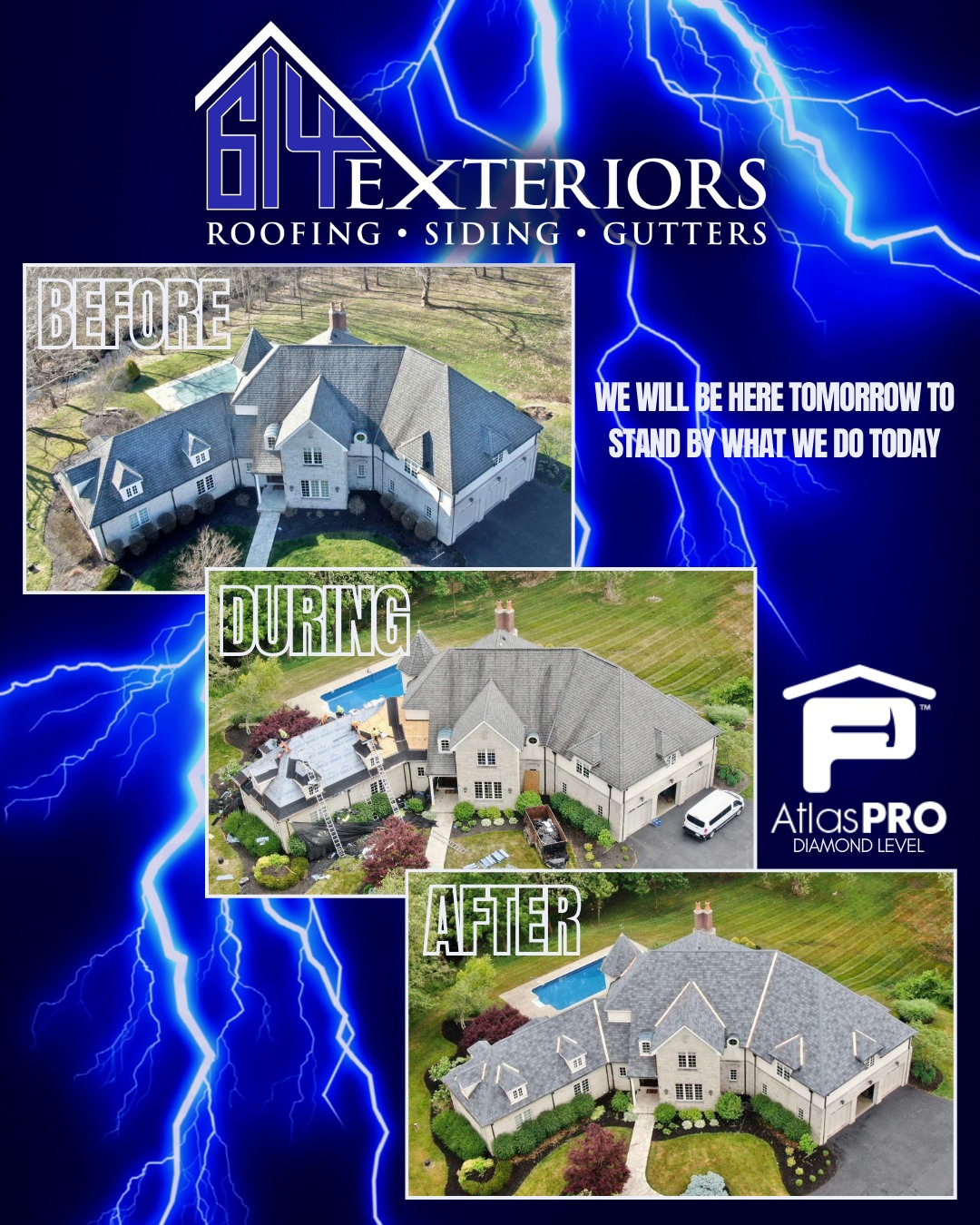
614 Exteriors is the ONLY Atlas PRO+™ Diamond Level Contractor in the Greater Columbus Area and only 1 of 3 in the state of Ohio
Learn MoreHow old may a roof be before insurance drops you? Understand roof lifespans, how aging affects coverage, and navigating insurance.

Roofs aren’t just part of your home’s design; they’re a central factor in your homeowners insurance. Because older roofs are more likely to leak or fail in a storm, insurers watch their age closely. Understanding when a roof becomes a liability, and how to document its condition, can help you avoid premium spikes or claim denials.
Insurers base roof coverage on risk. A roof under ten years typically qualifies for full replacement cost, but once it reaches 15 to 20 years, many carriers get cautious. They might require an inspection, drop wind and hail coverage, or reimburse you at the roof’s depreciated value rather than what it would cost to replace it. By 25 years, some companies will refuse renewal if the roof shows wear. These benchmarks vary by insurer, but they’re common enough to plan around. Planning might involve proactive roof repair or even a full roof replacement with more durable materials to stay within insurers’ guidelines.
State laws can modify these rules. In Florida, insurers can’t deny coverage for roofs under 15 years old if an inspector certifies at least five years of life remaining. In hail‑prone states, some policies change to actual cash value after ten years. Ask your agent about local guidelines to avoid surprises.
Different materials age differently, and insurers account for these variations. Asphalt shingles usually last 15–25 years, and coverage often tapers off after about 20 years. Metal roofs last 40–70 years and may qualify for lower premiums. Clay or concrete tiles can last 50–100 years, but they’re heavy and costly to replace. Cedar shakes offer natural beauty but tend to age around 20 years, while slate can exceed half a century but is expensive to repair. Climate, installation quality and maintenance can extend or shorten these figures.
For a deeper dive into how materials influence longevity, you can consult Nationwide’s roof lifespan guide, which outlines average lifespans and maintenance tips for different roofing types.
Understanding these lifespans helps you time a roof replacement and choose materials wisely.
Generally, yes—just not on the same terms. Many insurers will cover roofs past 20 years, but often at a reduced level. They may exclude hail and wind coverage or reimburse only the depreciated value. Premiums typically rise 5–15% after 15 years and can climb 25–50% by year 20. Documentation matters; a well‑maintained roof with proof of repairs stands a better chance of staying insured than a neglected one.
Carriers use building permits, past inspection reports, contractor invoices and even neighborhood databases to determine roof age. When records are sparse, they send an inspector to estimate age based on materials and installation techniques. That’s why it’s smart to keep receipts and photos from every roof repair or roof replacement you undertake. Clear documentation helps resolve disputes and shows you’ve maintained the roof responsibly.
There’s no single cutoff, but roofs older than 25 years often face steep hurdles. Some insurers decline to renew policies for roofs over 30 years. If your roof is approaching these thresholds, it’s wise to budget for replacement. Upgrading to impact‑resistant materials may improve coverage and lower premiums.
When reporting damage, avoid admitting neglect or implying your roof is overdue for replacement. Stick to the facts about the event (“hail cracked several shingles”), and provide photos and receipts. Don’t delay reporting; claims filed too late can be denied. Exaggeration is also risky—adjusters will assess the damage, and overstating it can undermine your credibility.

Routine care extends your roof’s life and keeps insurers happy. Clean gutters, remove debris and trim branches. Schedule annual inspections once your roof is a decade old; professionals can catch small issues before they become big ones. Promptly addressing minor repairs prevents insurers from chalking damage up to neglect. Eventually, though, repairs stop making sense. If shingles are curling, leaks recur or the roof nears its lifespan, replacement becomes the better investment. Work with a trusted local expert experienced in roofing in Columbus or your area to pick materials that meet building codes and withstand local weather. Coordinating projects can save time—for instance, when upgrading siding, you might ask, How Long Does Siding Installation or Replacement Take?.
An aging roof can dent your home’s market appeal. Buyers often deduct the cost of a new roof from their offers; homes with roofs older than 15 years sometimes appraise $10,000 to $15,000 lower. Conversely, a recently replaced roof can justify a higher asking price and speed up sales. A recent inspection report can ease buyer concerns.
How old may a roof be before insurance claims it’s too old? There’s no universal answer, but 20–25 years is a common range. Staying within an insurer’s guidelines means knowing your material’s expected lifespan, documenting maintenance and planning for timely replacement. Partnering with professionals in roofing in Columbus or your local area ensures that your roof repair or roof replacement meets local codes and weather challenges. By being proactive, you’ll keep coverage intact, control premiums and protect your home’s value.

With over 25 years of experience, 614 Exteriors LLC provides top-quality roofing and exterior renovations using premium materials at competitive prices. Licensed, bonded, and insured, we take pride in delivering exceptional craftsmanship and personalized service.
614 Exteriors is owned and operated by Keith Staschke. Keith has over 25 years of experience in the construction and roofing industry and can be trusted to get the job done right.
614 Exteriors LLC © 2019-2024 | Privacy Policy

Roofing
Siding
Gutters
Storm Restoration
Work Examples
Interactive Map
Our Materials
1-877-614-TRUST (8787)
contact@614exteriors.com
480 E Wilson Bridge Rd
Worthington, OH 43085
Open Monday–Friday: 9am–5pm
Closed Saturday & Sunday
Bexley
Canal Winchester
Columbus
Delaware
Dublin
Gahanna
Grove City
Groveport
Hilliard
Lewis Center
Marysville
New Albany
Pickerington
Powell
Reynoldsburg
Sunbury
Upper Arlington
Westerville
Worthington
There is a good chance we will be able to serve you where you are located.

