614 Exteriors is the ONLY Atlas PRO+™ Diamond Level Contractor in the Greater Columbus Area and only 1 of 3 in the state of Ohio
Learn MoreCompare GAF Slateline vs. Carriage House shingles for German Village roofs, and learn about timing, regulations and choosing a contractor.
Getting the right roof isn’t just about matching colors and materials. As a Columbus resident and owner of a local exterior company, I’ve helped neighbors protect their homes through countless storms and seasons. Working in German Village has given me a deep respect for the neighborhood’s character and for the families who want modern protection without losing the old‑world charm. When you’ve witnessed how a single leaking shingle can open the door to rot or how the wrong material can clash with a century‑old façade, your perspective changes. You’re not just installing shingles – you’re preserving history while respecting budgets and building codes.
Historic districts like German Village hold homeowners to higher standards. The city’s preservation guidelines and the area’s narrow brick cottages mean that roof replacements must blend seamlessly with slate‑look heritage. GAF Slateline and CertainTeed Carriage House are two popular asphalt shingles that mimic the look of natural slate without the weight or expense. Both options satisfy historic aesthetics while offering modern performance, but they differ in cost, construction and design. Choosing between them starts with understanding German Village’s climate, your budget and how much emphasis you place on authenticity.

German Village sits just south of downtown Columbus and was originally called “die alte sud ende” (the old south end). Starting in the early 1800s, German immigrants bought land from John McGowan and built tight rows of brick houses and small businesses. By 1865 a third of Columbus’s population was German, and the community thrived with breweries, shops and gardens. The area’s name reflected its residents’ heritage and the German language that echoed through schools and churches. Anti‑German sentiment during World War I led to name changes for streets and parks, but residents ultimately reclaimed the neighborhood’s identity. Today, German Village’s brick streets and tidy gardens remain a testament to the immigrants who shaped the district.
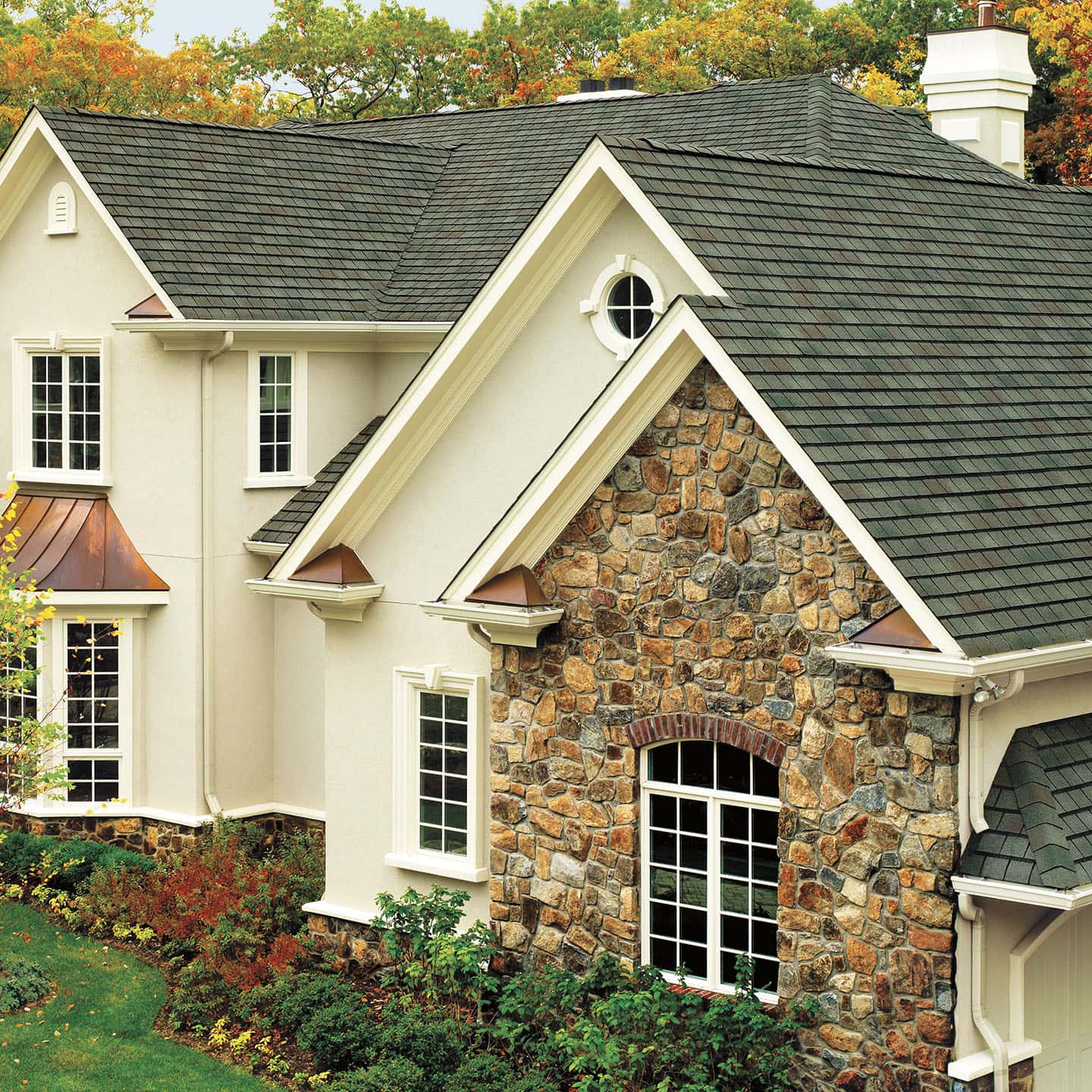
GAF Slateline shingles are a budget‑friendly way to achieve the look of hand‑cut slate. They feature oversized tabs and deep shadow lines that create an architectural profile at a fraction of slate’s cost. Some of the key advantages include:
From a contractor’s perspective, Slateline is easy to work with. The lighter weight and single‑layer design reduce material waste, and its lower cost makes it attractive for homeowners who need to stay within budget without compromising style. I’ve installed Slateline on many German Village roofs where homeowners wanted the feel of slate but couldn’t justify the expense or structural reinforcement needed for natural stone.
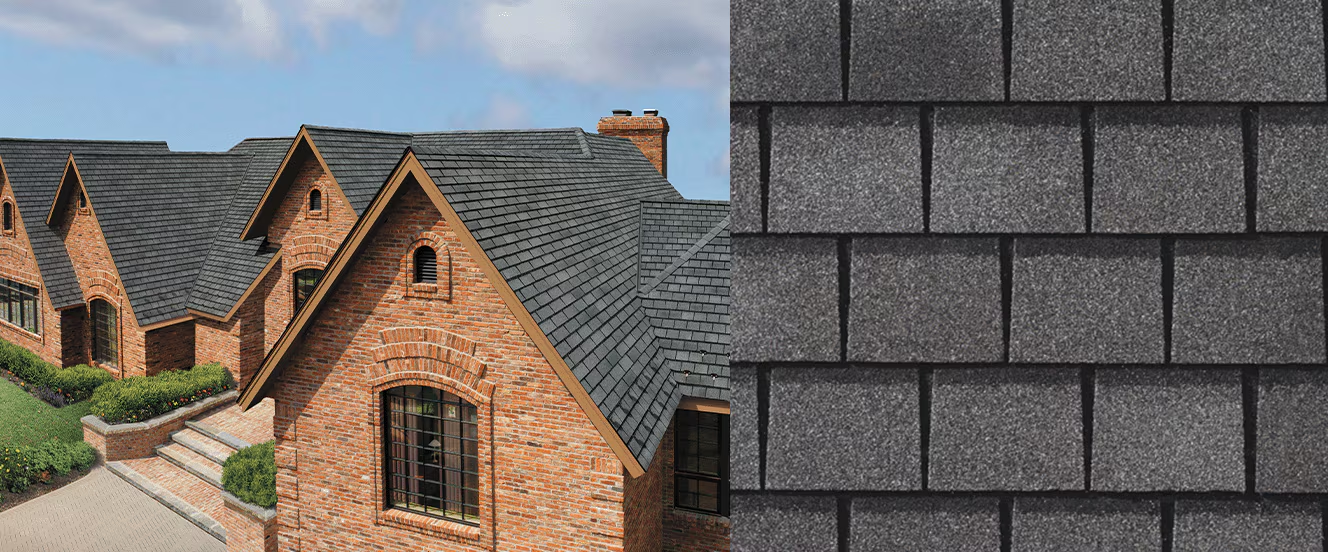
CertainTeed’s Carriage House shingles are the heavyweight counterpart to Slateline, offering an authentic scalloped slate appearance. Designed with two full‑size base shingles that overlap, each section creates four layers of protection. Their features include:
Carriage House shingles are heavier and more expensive than Slateline, and they require more precise installation. For historic homes with steep roofs and homeowners committed to preserving architectural detail, the investment can be worthwhile. In my experience, the weight of the shingle creates a distinctive dimensionality and helps anchor roofs in high‑wind events. However, the additional labor and material costs mean it’s best suited for projects with larger budgets.
A quick look at how these shingles differ:
As this table suggests, Slateline offers affordability and ease of installation, while Carriage House delivers heavier construction and a more authentic slate look. For most German Village homeowners, Slateline satisfies historic requirements without straining the budget. Carriage House is ideal for statement homes where the roof plays a central role in the façade.
Living through Ohio seasons, I’ve learned that timing matters when scheduling a roof replacement. Spring is the traditional start of roofing season because the weather warms up and winter storms reveal damage. However, spring can bring thunderstorms, so monitoring the forecast is key. Summer provides the longest stretches of dry weather and is often the most convenient time to install a new roof. Contractors typically start early in the day to avoid midday heat. Fall is another popular season because temperatures are mild and homeowners want to prepare for winter. In contrast, winter installations are feasible only in milder regions. Cold temperatures prevent asphalt shingles from sealing properly until warmer weather returns, making them vulnerable to wind damage. If you’re considering a project, consult your contractor and plan around local weather patterns. For more seasonal guidance, consult this article on the best time to replace a roof for additional expert insight.
Homeowners are sometimes surprised to learn that replacing or repairing more than a quarter of a roof can trigger building‑code upgrades. The 25% rule is a guideline adopted by several states that requires a roof to be brought up to current code when more than 25% of its surface area is repaired, replaced or recovered within a 12‑month period. In practical terms, if a hailstorm damages a large portion of your shingles and the repairs exceed that threshold, you may be obligated to replace the entire roof or roofing section and install modern underlayment, ventilation and fastening systems that meet today’s standards. The rule ensures safety and energy efficiency but can significantly affect project costs. When we assess storm damage in German Village, we measure the affected area precisely and educate homeowners about the implications. It’s one more reason to work with a trusted contractor who understands local regulations and can help you navigate insurance claims.
Although Dutch architecture isn’t a defining characteristic of German Village, it offers a useful lesson in roof design. Traditional Dutch colonial houses in the United States often feature gambrel roofs—a style where a shallow upper slope sits atop a steep lower slope. This configuration originated with 18th‑century Dutch settlers who wanted to maximize interior space without increasing building height. By splitting the roof into two angles, they achieved a wider span, creating extra habitable attic space and allowing water and snow to shed quickly. In the Netherlands, land was scarce and expensive, so houses were built narrow and tall with steeply pitched roofs to gain additional floors. Gables with ornate carvings served as status symbols and protected the façade from the elements. The gambrel design remains popular today for its quaint charm and practical space benefits.
Choosing between Slateline and Carriage House is just one part of your roofing journey. Who installs your roof is just as important as what you install. Over the last decade and a half, I’ve worn just about every hat at our company—from estimator to installer to owner—and that hands‑on experience shapes our approach. Here are a few considerations when selecting a Columbus Roofing Company for your project:
Roofing is a significant investment, and homeowners in historic districts carry the added responsibility of preserving architectural heritage. Whether you choose the Columbus Roofing Replacement or Columbus Roofing Installation service, partnering with a contractor who values craftsmanship, communication and community will make the process smoother.
When I meet with German Village homeowners, I always start with their priorities. If you need the look of slate on a modest budget, GAF Slateline delivers an elegant profile, algae protection and a strong warranty. If you want a thicker shingle with deep shadow lines and are willing to invest more in materials and labor, CertainTeed Carriage House offers a heritage feel and unmatched weight. Both products meet the neighborhood’s aesthetic guidelines and perform well in Ohio’s four‑season climate. Ultimately, the best shingle option is the one that aligns with your home’s architectural style, your budget and your long‑term maintenance goals. Working with a knowledgeable local contractor ensures that you’ll not only meet code requirements but also enjoy peace of mind for decades to come.

With over 25 years of experience, 614 Exteriors LLC provides top-quality roofing and exterior renovations using premium materials at competitive prices. Licensed, bonded, and insured, we take pride in delivering exceptional craftsmanship and personalized service.
614 Exteriors is owned and operated by Keith Staschke. Keith has over 25 years of experience in the construction and roofing industry and can be trusted to get the job done right.
614 Exteriors LLC © 2019-2024 | Privacy Policy

Roofing
Siding
Gutters
Storm Restoration
Work Examples
Interactive Map
Our Materials
1-877-614-TRUST (8787)
contact@614exteriors.com
480 E Wilson Bridge Rd
Worthington, OH 43085
Open Monday–Friday: 9am–5pm
Closed Saturday & Sunday
Bexley
Canal Winchester
Columbus
Delaware
Dublin
Gahanna
Grove City
Groveport
Hilliard
Lewis Center
Marysville
New Albany
Pickerington
Powell
Reynoldsburg
Sunbury
Upper Arlington
Westerville
Worthington
There is a good chance we will be able to serve you where you are located.

