614 Exteriors is the ONLY Atlas PRO+™ Diamond Level Contractor in the Greater Columbus Area and only 1 of 3 in the state of Ohio
Learn MoreHow much hail damage does it take to replace a roof? Learn when repair works and when storm restoration is the better choice.

A hailstorm can pass in minutes, yet the questions may last for weeks. Homeowners may see gutter dents, loose granules, or one missing shingle and wonder whether the roof needs repair or replacement. How Much Hail Damage Does It Take to Replace a Roof? When Storm Restoration Is the Better Option depends on the damage pattern, the roof’s age, the material, and whether the system can still protect the home.
Hail damage is not always obvious from the ground. A roof may look acceptable while shingles have bruised mats, loosened granules, or broken seals. A careful inspection should come before any recommendation.
There is no universal number of hail marks that automatically requires a new roof. Inspectors evaluate representative areas on different slopes, looking for a consistent pattern of functional damage. One damaged slope may call for repair, while widespread impacts can make replacement more reliable.
The decision also depends on material availability and whether surrounding shingles can be lifted without breaking. A newer roof with isolated damage may be a good candidate for Roof Repair. An older, brittle roof with repeated impacts may not be repairable without causing additional damage.
Storm restoration becomes the better option when damage affects the roof as a complete system rather than one small area. That can include widespread bruising, fractured mats, exposed asphalt, broken seals, damaged flashing, dented vents, and compromised gutters. The goal is not simply to cover visible spots. It is to restore dependable weather protection.
At 614 Exteriors, we have seen how a small visible problem can lead to a much larger project. In one case, a family friend had only three shingles blow off and had already been left waiting by another company. A detailed evaluation led to complete roof, decking, and gutter replacement, giving a young family a secure home instead of a temporary patch.
That story does not mean three missing shingles always justify a new roof. It shows why the visible symptom should not be treated as the entire diagnosis.
Hail damage can appear as dark impact marks, missing granules, soft bruises, circular dents, or exposed asphalt. The shingle may feel spongy at the impact point because the fiberglass mat underneath has cracked. Those fractures can reduce the shingle’s ability to shed water even when no leak has appeared.
An inspector will also check metal components for clues about storm direction and intensity. Dents in gutters, vents, flashing, window wraps, or siding may support the larger pattern. These clues matter, but they should not replace direct evaluation of the shingles.
Cosmetic damage changes appearance without clearly reducing performance. Functional damage affects the roof’s ability to resist water, wind, or continued weather exposure. Insurance coverage can depend on that distinction, so homeowners should understand how their policy defines both terms.
Three-quarter-inch hail can damage a roof, but size alone does not predict the result. Wind, hail density, roof angle, shingle age, temperature, and storm duration affect impact force. A newer architectural shingle may handle small hail better than an older, brittle shingle that has already lost granules.
The National Weather Service generally uses one-inch hail as part of its severe thunderstorm definition because hail at that size can damage roofs, vehicles, and other property. Still, .75-inch hail should not be ignored when it arrives with strong winds or lasts several minutes. Check ground-level areas first, then schedule a professional inspection instead of climbing onto the roof.
The “25% rule” is often repeated as though it applies everywhere, but roofing codes and insurance requirements vary by location. The phrase may refer to a local code provision, an insurer’s repair scope, or a contractor’s shorthand. It does not automatically mean every Ohio homeowner receives a full replacement once damage reaches a certain percentage.
Local building rules, policy language, repairability, matching requirements, and the insurer’s scope all matter. Ask the contractor and adjuster which written code or policy provision they are using. A written explanation is better than a promise that a percentage guarantees approval.

Repair is often reasonable when damage is isolated, the roof is relatively young, matching materials are available, and nearby shingles remain flexible. A contractor may replace several shingles, reseal fasteners, repair flashing, or correct a limited leak without disturbing healthy sections.
Before choosing a patch, ask whether the repair will preserve the manufacturer’s warranty and remain watertight. The guide Should I replace my whole roof or repair my roof after shingles came off from a storm? explains why missing shingles must be evaluated in the context of the entire roof.
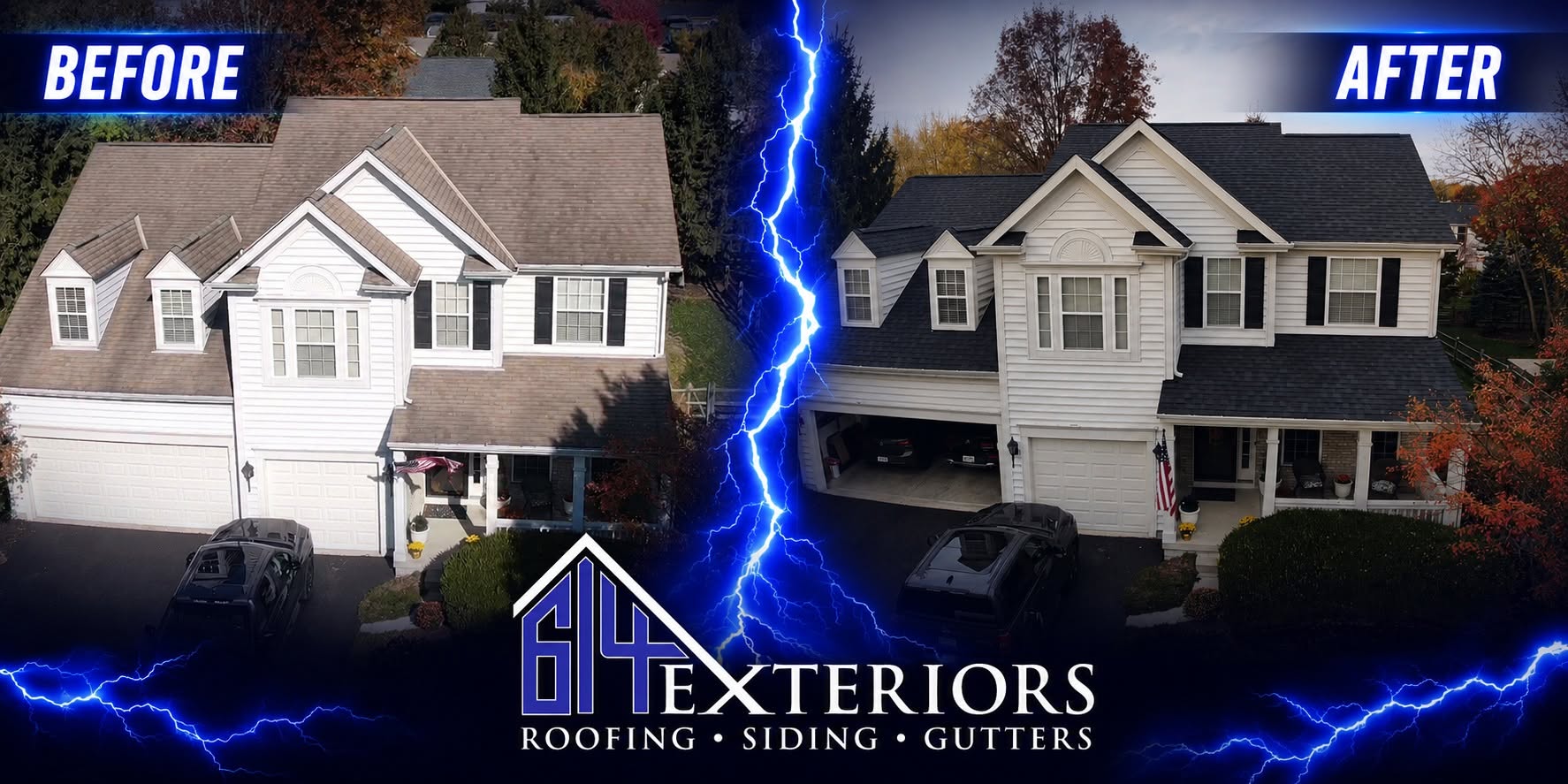
Roof Replacement makes more sense when hail impacts are widespread, the roof is near the end of its service life, repairs cannot be blended reliably, or the shingles are too brittle to manipulate. Replacement may also be appropriate when decking damage, ventilation problems, or multiple roofing layers are discovered.
We have opened roofs that appeared manageable and found extensive plywood damage underneath. An experienced team should be ready to document the condition, arrange materials, and keep the homeowner informed. Surprises happen in construction; poor communication does not have to.
For a full Roof Installation, the project should address more than shingles. Decking, underlayment, flashing, ventilation, drip edge, penetrations, and gutters all work together. Storm restoration is strongest when it rebuilds the system instead of replacing only the most visible layer.

A claim may be worth filing when a professional inspection shows covered storm damage and the expected cost is meaningfully higher than the deductible. Before filing, review replacement-cost versus actual-cash-value coverage, any separate hail deductible, and cosmetic-damage exclusions.
Document the storm date, take photos from safe ground-level locations, save weather alerts, and keep written inspection findings. Do not exaggerate or guess. Accurate information helps everyone involved.
It can be wise to understand the likely scope before opening a claim. Filing for a minor repair that barely exceeds the deductible may offer little benefit. However, delaying a legitimate claim could create timing or documentation problems, so contact your insurance agent promptly when meaningful damage is found.
A thorough inspection should cover accessible slopes, ridges, valleys, penetrations, flashing, gutters, downspouts, and related exterior surfaces. The contractor should photograph findings and explain whether each condition appears storm-related, age-related, installation-related, or uncertain.
Homeowners should also expect a discussion about repairability, matching materials, code requirements, and possible hidden decking damage. No one can see every piece of sheathing before tear-off, especially when a roof has multiple layers. A good team prepares for that possibility instead of pretending surprises never occur.
Review the National Weather Service severe thunderstorm safety guidance before inspecting your property after a storm. Stay off the roof, avoid damaged power lines, and do not let urgency push you into an unsafe decision.
After major storms, out-of-state companies often move quickly into affected neighborhoods. Homeowners should ask who will handle warranty concerns after storm activity moves elsewhere. Local reputation, established crews, insurance, licensing, and clear service provide accountability after installation.
Keith Staschke of 614 Exteriors advises homeowners not to let an unfamiliar person onto the roof simply because that person knocked on the door. Research the company first. Read reviews, verify its local presence, and make sure the contractor explains both what is damaged and what is still functioning.
The best recommendation is not always the biggest project. Sometimes the right answer is a repair. Sometimes hail has shortened the life of the entire roof, and complete restoration is the safer long-term choice.
How Much Hail Damage Does It Take to Replace a Roof? When Storm Restoration Is the Better Option cannot be answered by hail size, one dent, or a simple percentage alone. The answer comes from the damage pattern, roof condition, repairability, policy terms, and quality of the inspection.
Start with facts. Document the storm, have the roof evaluated by a reputable local professional, review your deductible and coverage, and ask for a written scope. That approach gives you the best chance of choosing a repair that lasts or a replacement that truly restores your home.

With over 25 years of experience, 614 Exteriors LLC provides top-quality roofing and exterior renovations using premium materials at competitive prices. Licensed, bonded, and insured, we take pride in delivering exceptional craftsmanship and personalized service.
614 Exteriors is owned and operated by Keith Staschke. Keith has over 25 years of experience in the construction and roofing industry and can be trusted to get the job done right.
614 Exteriors LLC © 2019-2024 | Privacy Policy

Roofing
Siding
Gutters
Storm Restoration
Work Examples
Interactive Map
Our Materials
1-877-614-TRUST (8787)
contact@614exteriors.com
480 E Wilson Bridge Rd
Worthington, OH 43085
Open Monday–Friday: 9am–5pm
Closed Saturday & Sunday
Bexley
Canal Winchester
Columbus
Delaware
Dublin
Gahanna
Grove City
Groveport
Hilliard
Lewis Center
Marysville
New Albany
Pickerington
Powell
Reynoldsburg
Sunbury
Upper Arlington
Westerville
Worthington
There is a good chance we will be able to serve you where you are located.

