614 Exteriors is the ONLY Atlas PRO+™ Diamond Level Contractor in the Greater Columbus Area and only 1 of 3 in the state of Ohio
Learn MoreRoof Overlay vs. Full Tear-Off for Ohio homes: compare cost, lifespan, code, hidden damage, warranties, and long-term value.
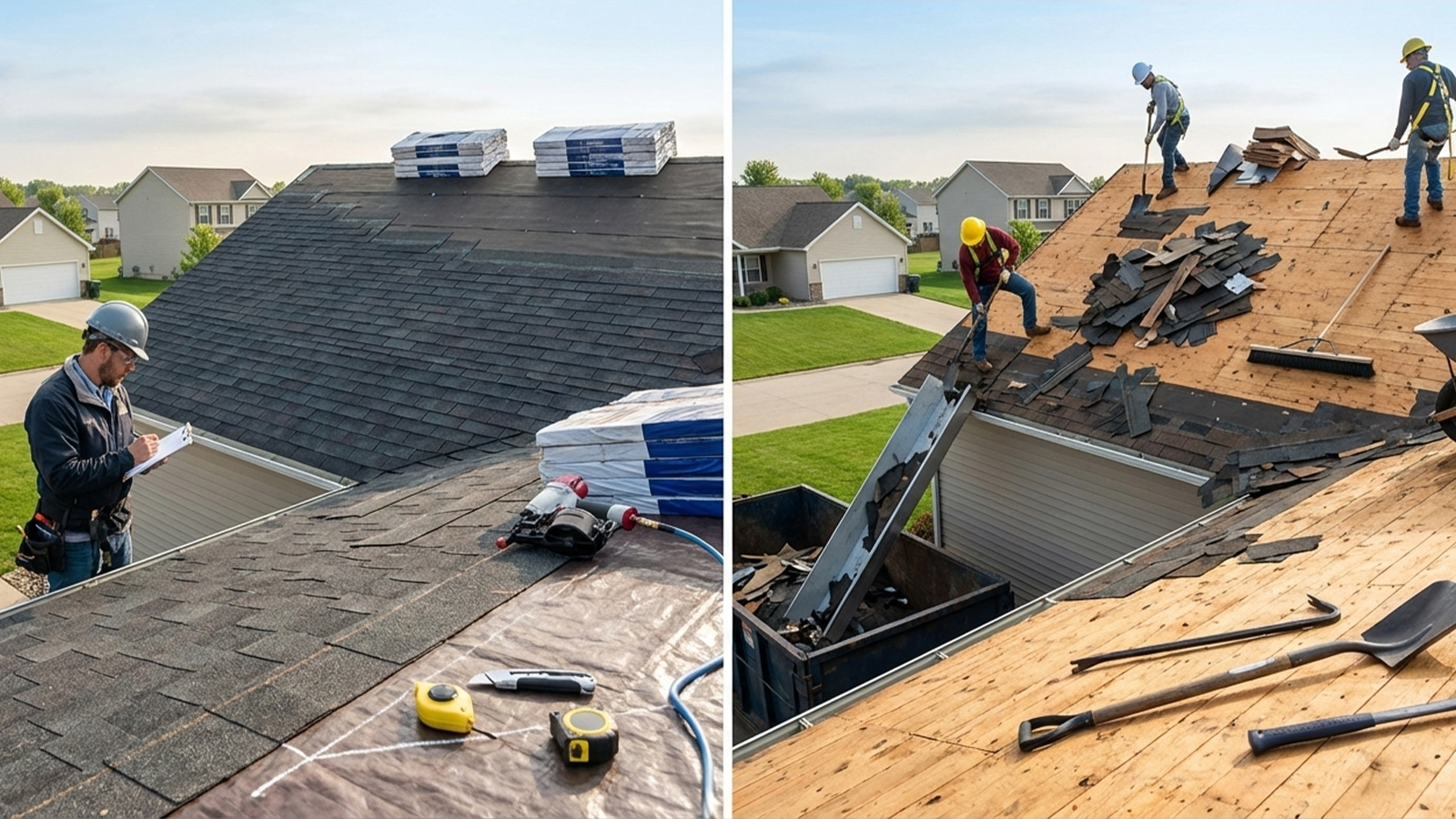
When homeowners ask, “Roof Overlay vs. Full Tear-Off: Which Roofing Option Is Better for an Ohio Home?” our answer is usually a full tear-off. It exposes the roof deck, allows damaged wood to be repaired, and gives the new roofing system a clean surface. An overlay can make sense, but only when the existing roof is in very good condition and code, product, and warranty requirements allow it.
Keith Staschke has described replacements where the roof looked manageable until the shingles came off and the crew found extensive plywood damage. An overlay reduces that visibility.
The biggest difference is not simply price. It is how much of the existing roofing system you can inspect and correct before the new shingles go on.
The roof underneath should drive the decision.
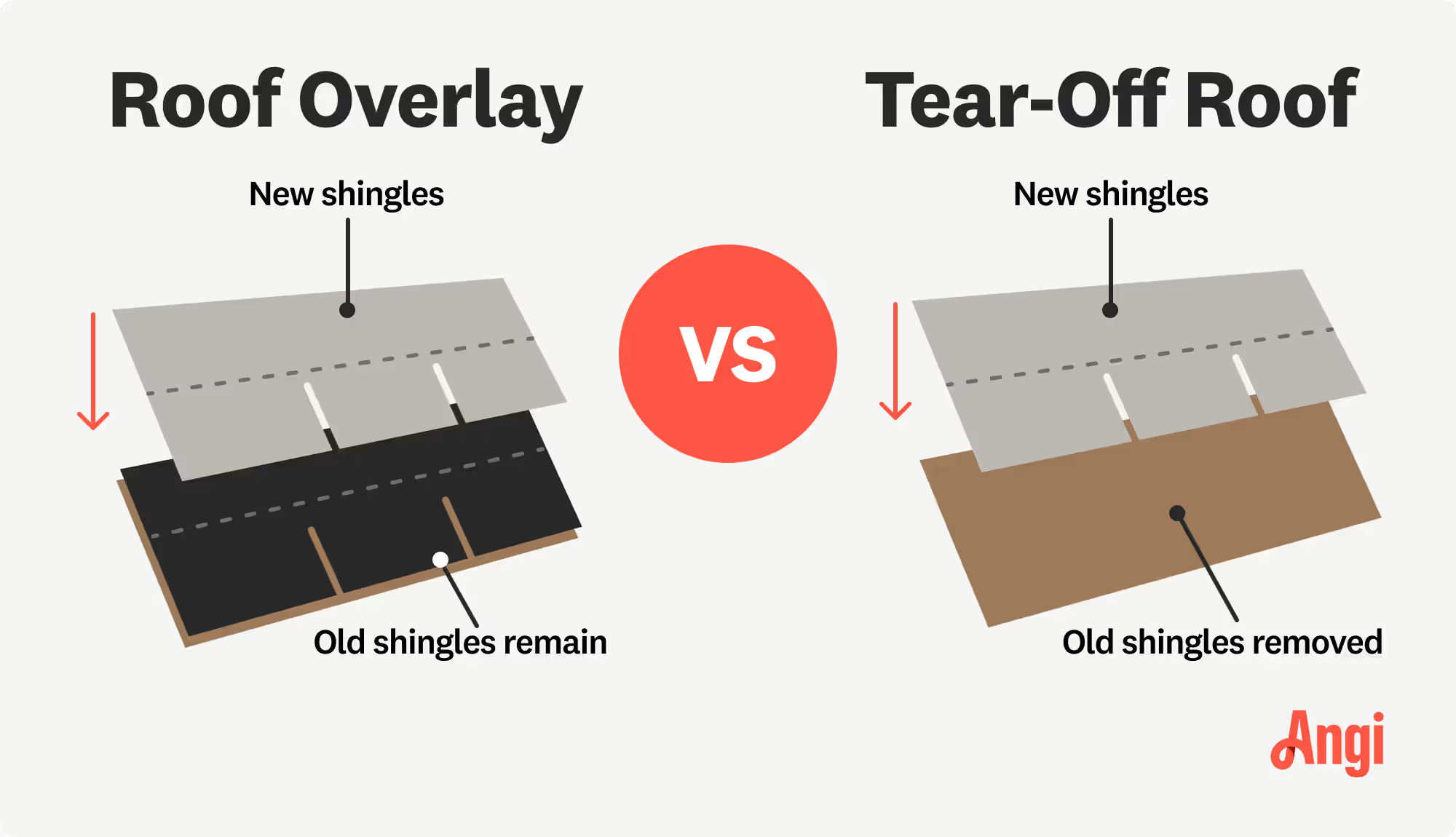
A roof overlay, sometimes called a roof recover, places new shingles over an existing layer. The old shingles remain, so the project skips much of the removal and disposal work.
A full tear-off removes the existing roofing materials down to the decking. The crew can inspect the sheathing, replace compromised wood, address flashing, install the required underlayment, and build the new system from a known starting point.
Keith has talked about tear-offs where damaged plywood was not obvious beforehand. In those cases, our crews had the process in place to get a truckload of wood delivered and keep the job moving.
Sometimes, but the roof has to be a strong candidate. An overlay should not be used to hide active leaks, soft decking, sagging, severe curling, or a roof that already has too many layers.
It also has to comply with local code and the shingle manufacturer’s instructions. Atlas, for example, publishes specific requirements for installing asphalt shingles over an existing asphalt roof. Homeowners can review the Atlas technical bulletin on installing shingles over existing shingles to see those conditions.
An overlay may be worth discussing when the existing roof is flat, dry, structurally sound, and compatible with the new roofing system. Even then, compare the short-term savings with the long-term limitations.
A full tear-off is usually stronger when there is any question about the roof deck. If there has been leaking, sagging, repeated repairs, storm damage, or significant age, removing the existing roof lets the installer see what is actually happening.
This connects to one of Keith’s biggest business lessons: know what is in your wheelhouse and do not keep pushing forward when a project reveals something different. On roofing jobs, damaged sheathing and framing are issues our crews know how to address. We prepare for them instead of covering them up.
That thinking also affects safety. Keith does not like roofing material live-loaded before the structure and sheathing are known to be secure, and crews use a ladder elevator to move bundles up.
There is no honest one-number answer. Lifespan depends on the shingles, ventilation, installation quality, sun exposure, storm history, and the condition of the roof underneath.
Consumer guides commonly describe overlays as having a shorter service life than a new roof installed on a clean deck. New shingles are being installed over an older surface, and irregularities or hidden problems underneath can affect the finished system.
Warranty coverage can differ too. Atlas allows certain roof-over applications when its requirements are followed, but its guidance notes that some enhanced warranty coverage is not available on a roof-over. That should matter if you are investing in premium materials.
614 Exteriors is the Greater Columbus area’s only Atlas PRO+™ Diamond Level Contractor, so we look at the entire roofing system rather than only the shingle color or immediate price.
A roof overlay generally costs less because there is less tear-off labor, debris handling, and disposal expense. Current national consumer estimates often put overlay savings around 20% to 40% compared with a full tear-off, although the actual difference on an Ohio home can be smaller or larger.
Roof size, pitch, access, valleys, chimneys, flashing, ventilation, shingle selection, and labor all affect the quote. That is why a percentage is more useful than promising a flat dollar amount.
Keith points to Hover estimation as a turning point for 614 Exteriors because it gives the sales team a consistent, detailed way to build estimates in the field. Instead of guessing at quantities, the goal is to know what is going into the job before work starts.
The cheapest proposal is not automatically the best value. If an overlay saves money today but leaves damaged decking hidden or reduces the warranty options you wanted, that savings can disappear quickly.

Ohio reroofing rules and local building departments can restrict when a roof recover is permitted. Manufacturer instructions can be even more specific. Roofs that are water-soaked, deteriorated, structurally questionable, or already have multiple roofing applications may require removal rather than another layer.
Storm damage adds another issue: do not assume a quick overlay is right because shingles blew off. Keith’s advice after a storm is to be careful about who gets on your roof. Columbus can attract out-of-state storm-chasing companies after major wind events, and they may not be around later when you need warranty help.
If damage is limited, a targeted repair may be possible. If it is widespread, code, matching, or insurance requirements can push the project toward replacement. Our guide, What Is the 25% Rule for Roofing? (Insurance & Code Requirements), explains why the percentage of damaged roofing is only one part of that decision.
The right answer starts with an inspection, not a sales pitch. We want to know how many layers are present, whether the shingles lie flat, whether there are leak indicators, what the deck looks like where it can be observed, and whether the proposed product allows a recover.
A localized repair can make sense when damage is isolated and the rest of the roof still has useful service life. Missing shingles, a flashing issue, or a small leak does not automatically mean the entire roof needs replacement.
Replacement becomes more compelling when problems are widespread, the roof is near the end of its life, there are multiple layers, or the deck needs to be evaluated. A full tear-off lets the contractor correct the system rather than simply cover it.
Starting at the roof deck creates a cleaner baseline for underlayment, flashing, ventilation, shingles, and warranty requirements. It also gives the crew a chance to deal with surprises before the roof is closed back up.
That matters because construction does not always go perfectly. Keith often tells the team that what matters is how you handle the issue. The goal is not to pretend surprises never happen. It is to catch them, communicate clearly, and fix them correctly.
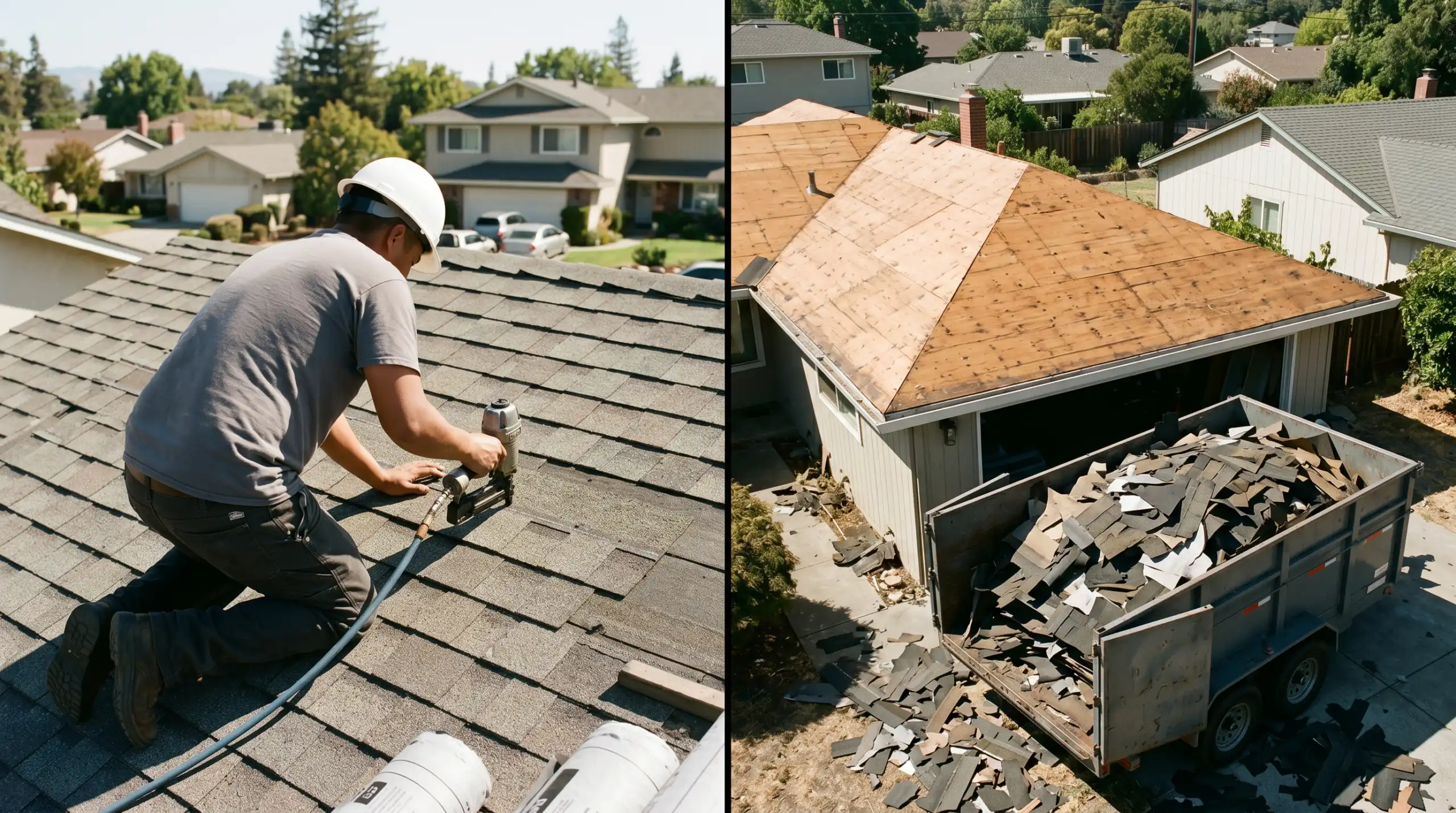
For most homeowners planning to stay in the house, a full tear-off offers the clearest long-term advantage. You get visibility into the decking, a cleaner installation surface, fewer questions about hidden damage, and generally better access to manufacturer warranty options.
An overlay can still be legitimate on the right roof. It just should not be chosen because it is faster or cheaper without first confirming the existing system is a suitable base.
If you are comparing an overlay with a full Roofing replacement in Columbus or the surrounding area, 614 Exteriors can inspect the roof, explain the trade-offs, and help you choose the option that fits the actual roof rather than forcing every homeowner into the same answer.

With over 25 years of experience, 614 Exteriors LLC provides top-quality roofing and exterior renovations using premium materials at competitive prices. Licensed, bonded, and insured, we take pride in delivering exceptional craftsmanship and personalized service.
614 Exteriors is owned and operated by Keith Staschke. Keith has over 25 years of experience in the construction and roofing industry and can be trusted to get the job done right.
614 Exteriors LLC © 2019-2024 | Privacy Policy

Roofing
Siding
Gutters
Storm Restoration
Work Examples
Interactive Map
Our Materials
1-877-614-TRUST (8787)
contact@614exteriors.com
480 E Wilson Bridge Rd
Worthington, OH 43085
Open Monday–Friday: 9am–5pm
Closed Saturday & Sunday
Bexley
Canal Winchester
Columbus
Delaware
Dublin
Gahanna
Grove City
Groveport
Hilliard
Lewis Center
Marysville
New Albany
Pickerington
Powell
Reynoldsburg
Sunbury
Upper Arlington
Westerville
Worthington
There is a good chance we will be able to serve you where you are located.

