614 Exteriors is the ONLY Atlas PRO+™ Diamond Level Contractor in the Greater Columbus Area and only 1 of 3 in the state of Ohio
Learn MoreSoffit and fascia damage can hide leaks, rot, and ventilation problems. Learn when cosmetic wear becomes a bigger home repair.
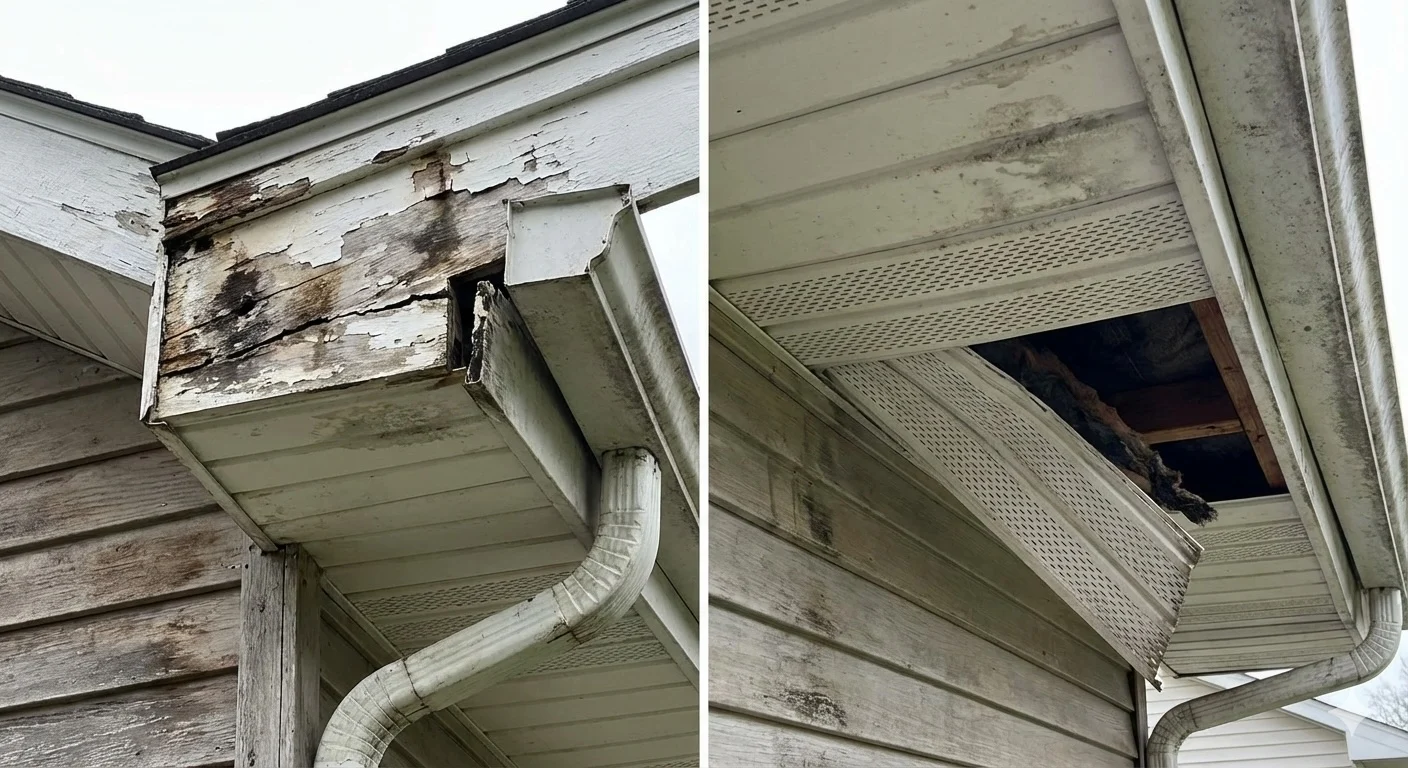
Soffit and fascia damage becomes more than cosmetic when it lets water, pests, or uncontrolled airflow reach the roof edge, attic, sheathing, or framing. Peeling paint may only affect appearance, but soft wood, sagging panels, stains, recurring leaks, loose gutters, or blocked ventilation can point to a repair that should not wait.
That distinction matters in Central Ohio. Soffit and Fascia Damage: When Is It More Than a Cosmetic Problem? is really a question about what is happening behind the material you can see. Columbus averages about 41.6 inches of precipitation a year under the 1991–2020 climate normals, so roof-edge details have to handle plenty of rain, snow, freezing weather, and wind.
At 614 Exteriors, owner Keith Staschke has seen how a small visible issue can turn into a much larger discovery. On one restoration project, what began as a small leak revealed extensive hidden damage after the exterior was opened. The lesson was simple: visible damage does not always show the full scope underneath.
Soffit covers the underside of the roof overhang. Fascia is the vertical board or covering along the roof edge, usually where gutters attach. Both improve appearance, but both also help protect the roof assembly.
The U.S. Department of Energy notes that soffit ventilation can help control attic moisture and protect roof sheathing and structural members. Its Guide to Durable Attics explains that poor attic ventilation can contribute to moisture buildup, damaged insulation, mold, and wood deterioration.
That is why a cracked panel or deteriorated fascia board deserves more than a quick glance. The question is not only, “Does this look bad?” It is, “Is water or air getting somewhere it should not?”
Most problems start with moisture, movement, impact, pests, or age. Clogged gutters can repeatedly soak fascia, while a damaged drip edge may let water reach the roof edge instead of moving cleanly into the gutter.
Soffit panels can loosen in wind, crack, sag, or become stained. Wood fascia can peel, swell, split, or rot. Aluminum and vinyl do not rot like wood, but they can still bend, detach, or hide deteriorated wood behind them.
The most useful question is often where the water is coming from. A gutter problem, failed roof-edge detail, or leak can make soffit or fascia damage look isolated when it is actually a symptom.
Keith has described similar surprises during roof tear-offs. Sometimes damaged plywood cannot be confirmed until the shingles come off. That same mindset matters here: inspect beyond the surface before assuming a repair is purely cosmetic.

Cosmetic damage affects appearance without reducing the component’s ability to do its job. Minor fading, light surface discoloration, or a small dent in metal fascia may fall into that category if there is no opening, moisture intrusion, loose material, or deterioration.
The line changes when material is soft, separated, missing, or allowing water behind it. Staining that keeps returning also deserves attention. What looks like a paint problem can be the visible end of a moisture problem.
A practical test is whether the area still sheds water, stays attached, supports the gutter where required, and allows the intended ventilation path to work. If that is uncertain, an inspection is more useful than simply painting over it.
Yes. Localized fascia damage can often be repaired when the affected area is limited and the surrounding roof edge remains sound. A contractor may replace one section, correct the water source, reinstall the fascia covering, or secure nearby gutter components.
The key is not to replace rotten fascia while leaving the cause in place. If an overflowing gutter or roof-edge leak keeps wetting the new material, the repair may fail again.
For homeowners considering Fascia Repair, it is smart to have the adjoining soffit, gutter, drip edge, and roof sheathing checked at the same time.
Sometimes, but coverage usually depends on the cause and your policy language. Damage from a sudden covered event, such as wind or a falling object, may be handled differently from deterioration caused by age, rot, neglected maintenance, or long-term moisture.
Do not assume “storm damage” means the entire repair is covered. Document the area, note when you noticed it, and contact your insurer if you believe a covered event caused the damage. Your carrier or adjuster ultimately determines coverage under your policy.
Keith’s advice after storms is useful here, too: research a contractor before letting anyone onto the roof, especially after major weather events when out-of-area storm crews may enter the market.

Cost depends on material, access, roof height, linear footage, ventilation, gutter work, and hidden wood damage. Current 2026 Angi data places professional soffit replacement at roughly $6 to $30 per linear foot, with an Ohio average around $2,100 for a soffit replacement project.
For fascia, Angi reports a typical professional replacement range of about $1,050 to $3,300, with many projects around $7 to $22 per linear foot. These are broad planning figures, not Columbus-specific quotes.
A small Soffit Repair can cost far less than full replacement. The price rises when repairs uncover rotten sheathing, damaged framing, failed gutters, difficult second-story access, or ventilation issues.
ConditionLikely approachFaded paint or light staining with solid, dry materialMonitor, clean, or refinishOne loose or cracked soffit panelLocalized repair may be enoughSoft or rotted fasciaReplace damaged material and find the moisture sourceSagging soffit with stainingInspect for leaks, pests, and hidden deteriorationRepeated gutter separationCheck fascia strength and gutter attachmentWidespread eave damageEvaluate roof edge, sheathing, ventilation, and gutters together
There is no universal replacement schedule. Material, installation quality, drainage, maintenance, storm exposure, and attic conditions all affect service life. A good system may last for decades, while chronic moisture can shorten that life substantially.
Instead of replacing these parts based on age alone, inspect them during routine exterior maintenance and after major storms. Look for new stains, gaps, loose pieces, peeling finishes, animal entry points, and gutter movement.
This is also a good time to assess nearby siding. Our guide, How Long Does Vinyl Siding Last in Ohio? When It's Time to Consider Exterior Painting or Replacement, explains why actual condition can matter more than age alone.
Call for an inspection when damage is growing, recurring, or connected to moisture. Soft fascia, sagging soffits, holes, active leaks, persistent staining, and gutters pulling away from the roof edge can all mean the problem extends beyond appearance.
Pest activity is another red flag. Gaps around soffit can give birds, insects, and small animals access to protected spaces near the attic.
You should also act after wind damage. A missing soffit panel may seem minor from the ground, but it can expose the roof overhang and change how wind-driven rain reaches the eave area.
Soffit and fascia meet the roofing, gutters, siding, attic ventilation, roof sheathing, and exterior trim. Good Exterior Home Repair looks at those connections instead of treating every damaged piece as a separate problem.
Keith has said underlying issues are manageable when they fall within the company’s core roofing, siding, and gutter work because the team is prepared for damaged plywood, sheathing, or framing. He has also been candid about knowing when a project moves outside your specialty and should be referred elsewhere.
That is a useful standard for homeowners, too. The goal is not the biggest repair. It is correctly identifying the source, affected materials, and right scope.
Soffit and fascia damage is more than cosmetic when it affects moisture control, ventilation, gutter support, pest resistance, or materials behind the roof edge. Catching those changes early can keep a localized repair from becoming a larger roofing or exterior project.
If you are unsure what you are seeing, a qualified Columbus Roofing Company can inspect the roof edge and help separate surface wear from damage that needs attention. The best next step is usually not guessing from the ground. It is finding out why the material changed in the first place.

With over 25 years of experience, 614 Exteriors LLC provides top-quality roofing and exterior renovations using premium materials at competitive prices. Licensed, bonded, and insured, we take pride in delivering exceptional craftsmanship and personalized service.
614 Exteriors is owned and operated by Keith Staschke. Keith has over 25 years of experience in the construction and roofing industry and can be trusted to get the job done right.
614 Exteriors LLC © 2019-2024 | Privacy Policy

Roofing
Siding
Gutters
Storm Restoration
Work Examples
Interactive Map
Our Materials
1-877-614-TRUST (8787)
contact@614exteriors.com
480 E Wilson Bridge Rd
Worthington, OH 43085
Open Monday–Friday: 9am–5pm
Closed Saturday & Sunday
Bexley
Canal Winchester
Columbus
Delaware
Dublin
Gahanna
Grove City
Groveport
Hilliard
Lewis Center
Marysville
New Albany
Pickerington
Powell
Reynoldsburg
Sunbury
Upper Arlington
Westerville
Worthington
There is a good chance we will be able to serve you where you are located.

